Skip to Main

HC

Turn On High Contrast Mode for Improved Visibility

Governance & Ethical Business Practices

Overview

RYAM’s governance framework promotes accountability, transparency, and responsible business practices across the organization. Environmental, social, and operational priorities are integrated into enterprise governance structures and overseen at both the Board and management levels.

Board & Management Oversight

RYAM maintains governance structures that provide oversight of key business risks, including compliance, environmental performance, and operational execution.

Oversight includes:

  • The Board of Directors and its committees, including the Nominating and Governance Committee
  • Executive leadership
  • Cross-functional management structures supporting sustainability and operational priorities

Sustainability and governance topics are integrated into Board-level oversight processes, reflecting the maturity of RYAM’s sustainability program and its alignment with broader corporate strategy.
Ethics & Compliance Framework

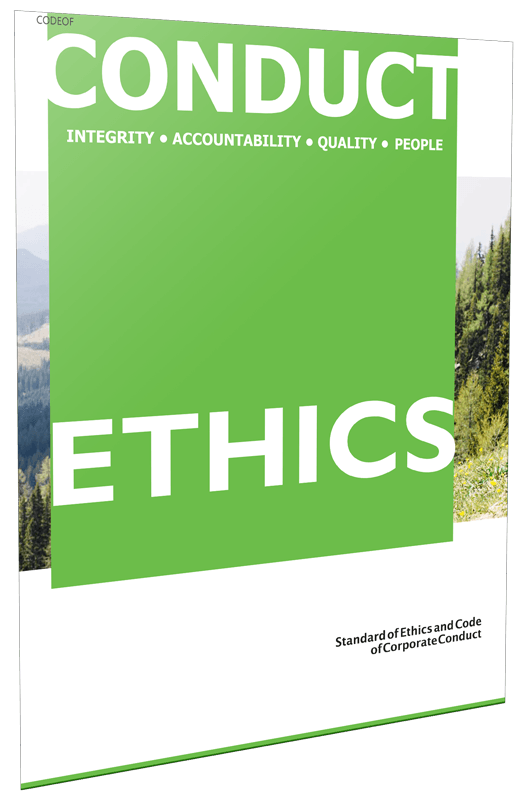
RYAM maintains a company-wide ethics and compliance program designed to promote responsible conduct and adherence to applicable laws and internal standards.

Key elements include:

  • Code of Conduct outlining expectations for employees
  • Policies addressing ethics, compliance, and responsible business practices
  • Monitoring processes, including audits, reviews, and compliance risk assessments

Employees participate in annual compliance training related to the Code of Conduct. Training completion is tracked and reinforced through management accountability and internal monitoring systems.

For additional information, see our Code of Conduct.

Speak-Up Culture & Reporting

RYAM promotes a culture of integrity and accountability by providing employees and contractors with multiple channels to raise concerns or report potential violations of laws, policies, or the Code of Conduct. These include:
  • An Ombudsman confidential reporting resource
  • Anonymous reporting options available through an independent third party
  • Internal escalation channels, including Human Resources, Internal Audit, and the Law Department
The Ombudsman serves as a dedicated resource to provide guidance on ethics and compliance questions and to ensure timely and effective responses to reported concerns. Reports may be made anonymously and are treated confidentially to the fullest extent permitted by company policy and applicable law. All reports are taken seriously and investigated thoroughly, with oversight from management and the Audit Committee of the Board. RYAM maintains a strict non-retaliation policy for individuals who raise concerns in good faith. If you would like to report a concern related to ethics, compliance, or potential misconduct, please use our confidential reporting channels: Reports may be made anonymously and are handled by an independent third party. RYAM maintains a strict non-retaliation policy for individuals who raise concerns in good faith.

Risk Management & Internal Controls

RYAM monitors environmental, operational, and compliance-related risks through structured processes, including enterprise risk management and Board-level oversight.

These processes support:

  • Identification and assessment of key risks
  • Monitoring through management and Board review
  • Integration into business planning and decision-making

Environmental and operational risks are considered alongside broader enterprise risks to support long-term resilience.

RYAM evaluates climate-related risks as part of its broader enterprise risk management processes. These include both physical risks (such as extreme weather and operational impacts) and transition risks (such as regulatory and market changes). Climate-related risks are reviewed through management and Board oversight structures and are integrated into business planning and decision-making processes.

Transparency & Continuous Improvement

RYAM continues to enhance governance practices through:

  • Expanded public disclosures
  • Alignment with external expectations and frameworks
  • Ongoing refinement of internal systems and controls

These efforts support transparency, accountability, and long-term value creation.